

Subject to Lead Time - Contact for more information
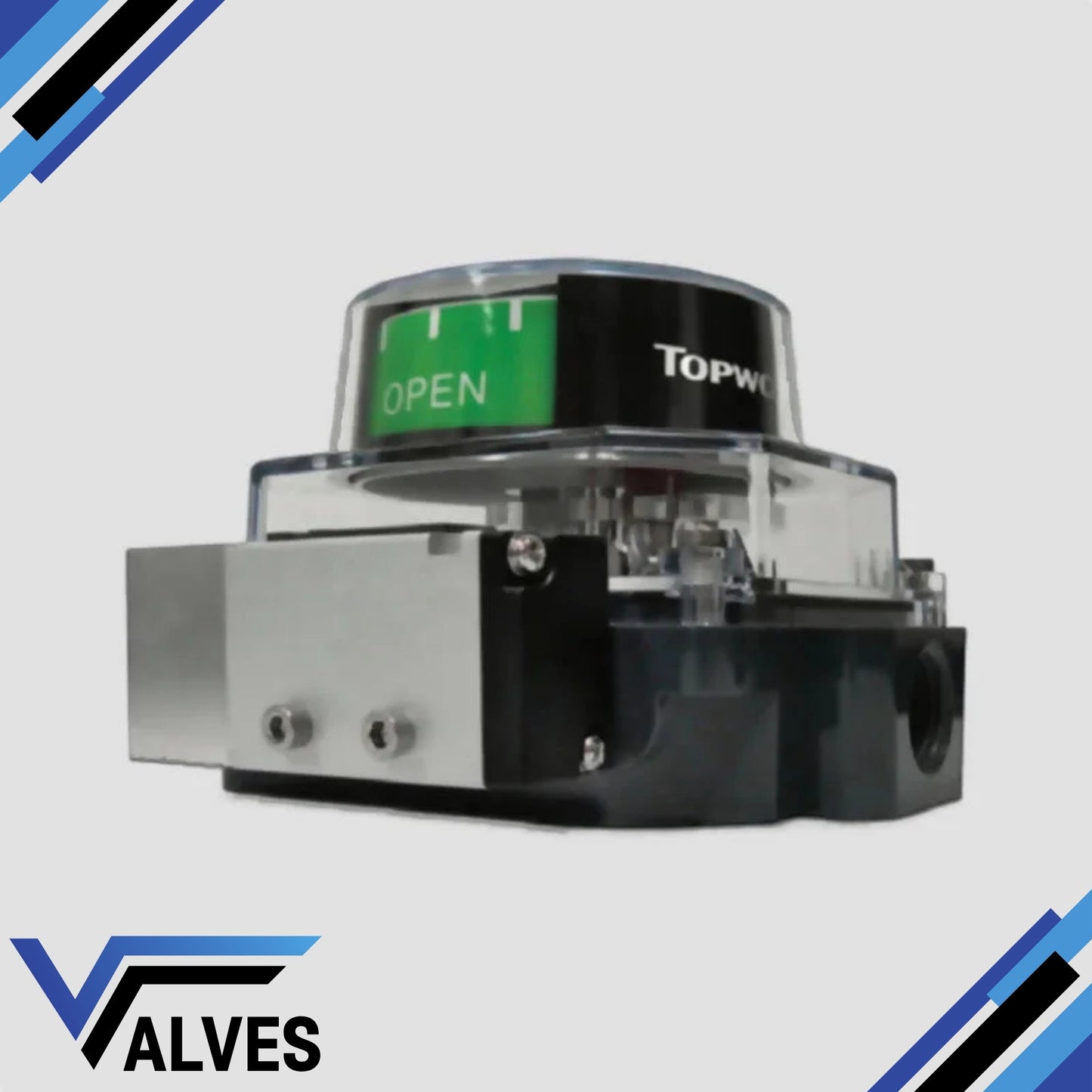
TopWorx Limit Switch Box TVA-K20BNCM Valve Monitor
TopWorx Limit Switch Box TVA-K20BNCM Valve Monitor
Couldn't load pickup availability
The TopWorx TVA-K20BNCM Limit Switch Box is a modular valve position monitor from the TVA (resin-enclosure) series designed to deliver reliable visual and electrical feedback for quarter-turn actuated valves. As part of the general-purpose TVA family, it offers outstanding value through a high-impact resin housing, clear colour-coded indicator, and flexibility via various internal switch or sensor modules.
Key Features
Durable composite resin housing (TVA series) provides cost-effective reliability and high impact resistance for industrial use.
Mechanical SPDT gold-contact switches (K2) offer robust feedback output for open/close monitoring.
90° visual indicator with Black = OPEN gives quick on-site status without needing a display screen.
NAMUR stainless-steel shaft interface ensures compatibility with many quarter-turn actuated valves and mounting kits.
M20 resin conduit entries (2×) allow easy wiring in metric installations.
Silicone O-ring sealing enhances ingress protection in industrial ambient conditions.
Intrinsically safe certified (Area Class “0”) – suitable for installations requiring I.S. rating.
Modular design allows selection of switch modules, sensor options, visual styles and conduit configurations.
Share
Enquire Online!
FAQ's
What is the difference between a valve and an actuator?
What types of actuators are available?
The main types of actuators are:
Pneumatic actuators – use compressed air for fast, reliable operation.
Electric actuators – use electrical power for precise control.
Hydraulic actuators – use fluid pressure for high-torque applications.
Each type offers unique advantages depending on the environment, media, and system control needs.
How do I choose the right actuator for my valve?
To select the correct actuator, consider:
Valve type and torque requirement
Power source available (air, electric, or hydraulic)
Operating environment (temperature, humidity, hazardous area)
Control signal type (on/off or modulating)
Matching actuator torque and compatibility with the valve’s ISO mounting ensures reliable performance.
What are the main types of valves used in automation?
The most common valves in automated systems include:
Ball valves – for tight shutoff and quick operation.
Butterfly valves – for larger flow control with compact design.
Globe valves – for precise throttling and flow regulation.
Check valves – to prevent backflow.
Gate valves – for full bore flow isolation.
What’s the difference between a double-acting and spring-return actuator?
Double-acting actuators use air (or power) to both open and close the valve.
Spring-return actuators use air to open (or close) the valve, and a built-in spring to automatically return it to a safe position when power or air is lost — ideal for fail-safe operation.
How often should valves and actuators be serviced?
Regular maintenance intervals depend on operating conditions, but a good rule of thumb is to inspect every 6–12 months.
This includes checking for leaks, lubrication, seal wear, and actuator responsiveness to prevent unexpected downtime.