
Skip to product information
1 of 1

Subject to Lead Time - Contact for more information

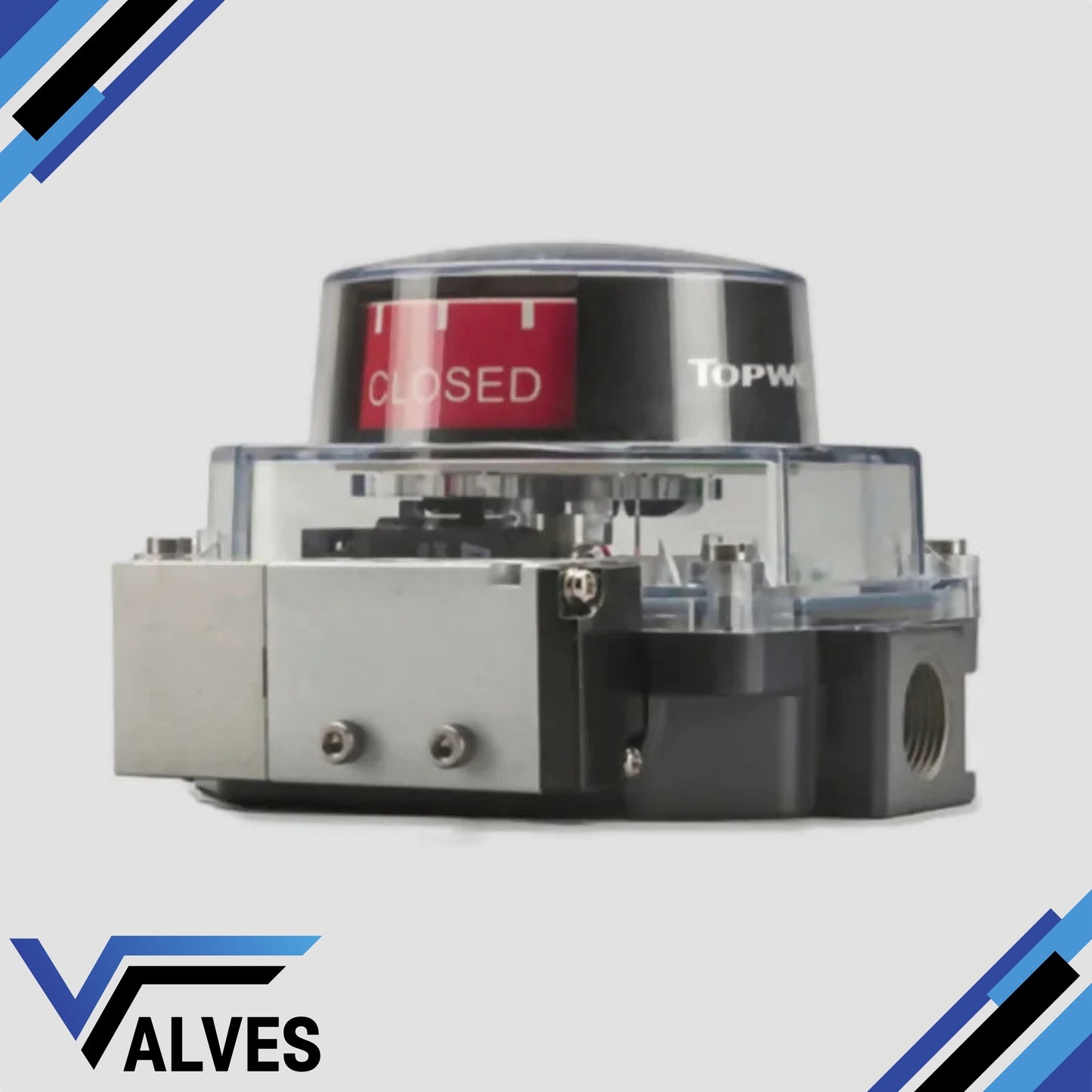
TopWorx Limit Switch Box TVF-E20GN1M Valve Monitor

TopWorx Limit Switch Box TVF-E20GN1M Valve Monitor

Regular price £314.89 GBP
Regular price Sale price £314.89 GBP
Sale Enquire Now
Taxes included. Shipping calculated at checkout.

Key Features

Durable aluminium base with clear resin lid offering corrosion resistance and easy visual monitoring.

Inductive NAMUR sensor module (E2) giving reliable contactless open/closed feedback of the valve position.

Standard 90° Green = OPEN visual indicator for immediate onsite status check.

NAMUR shaft interface enabling direct mounting to actuators with minimal adaptor work.

Modular design of the TVF series supports a broad range of sensor, display and mounting configurations. 

Safe-area, non-hazardous rating simplifies installation where explosion-proof certification is not required.


Applications

Visual and electronic monitoring of quarter-turn actuated valves (ball, butterfly, plug) in industrial automation systems.

Suitable for sectors such as water & wastewater, chemical, HVAC, utilities — particularly when hazard-area certification is not needed.

Retrofit or new installations where direct-mount actuator/valve assemblies use NAMUR interface and require sensor feedback.
View full details

Enquire Online!

FAQ's

What is the difference between a valve and an actuator?

A valve controls the flow of a fluid (such as water, gas, or steam), while an actuator is the device that operates the valve — automatically opening, closing, or positioning it. Actuators can be electric, pneumatic, or hydraulic, depending on the application and control requirements.

What types of actuators are available?

The main types of actuators are:

Pneumatic actuators – use compressed air for fast, reliable operation.

Electric actuators – use electrical power for precise control.

Hydraulic actuators – use fluid pressure for high-torque applications.

Each type offers unique advantages depending on the environment, media, and system control needs.

How do I choose the right actuator for my valve?

To select the correct actuator, consider:

Valve type and torque requirement

Power source available (air, electric, or hydraulic)

Operating environment (temperature, humidity, hazardous area)

Control signal type (on/off or modulating)

Matching actuator torque and compatibility with the valve’s ISO mounting ensures reliable performance.

What are the main types of valves used in automation?

The most common valves in automated systems include:

Ball valves – for tight shutoff and quick operation.

Butterfly valves – for larger flow control with compact design.

Globe valves – for precise throttling and flow regulation.

Check valves – to prevent backflow.

Gate valves – for full bore flow isolation.

What’s the difference between a double-acting and spring-return actuator?

Double-acting actuators use air (or power) to both open and close the valve.


Spring-return actuators use air to open (or close) the valve, and a built-in spring to automatically return it to a safe position when power or air is lost — ideal for fail-safe operation.

How often should valves and actuators be serviced?

Regular maintenance intervals depend on operating conditions, but a good rule of thumb is to inspect every 6–12 months.

This includes checking for leaks, lubrication, seal wear, and actuator responsiveness to prevent unexpected downtime.